
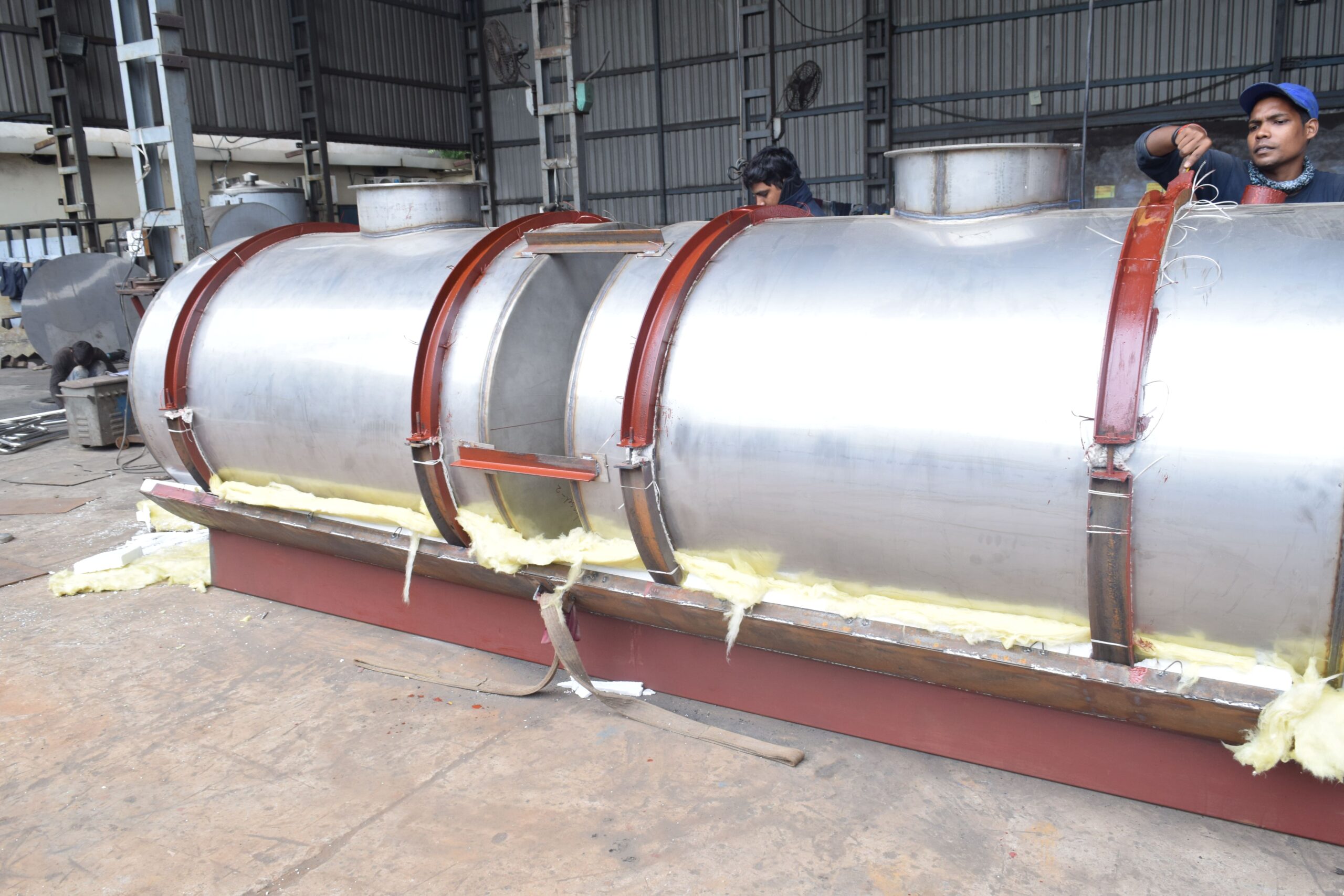
Fabricated with heavy-gauge AISI SS 304/316 food-grade stainless steel, engineered for 24/7 continuous hygienic operation, high thermal efficiency, and minimal dairy maintenance.
Road milk tankers are specialized vehicles designed for the transportation of liquid milk. They come in various configurations, including single and multi-compartment designs, each with specific features tailored to maintain the quality and safety of the milk during transport. Here’s a detailed description of each type:
| Structure | Single-compartment milk tankers have one large, insulated tank. |
| Capacity | The capacity varies, typically ranging from 5,000 to 25,000 liters, depending on the size of the tanker. |
| Material | Tanks are usually made of stainless steel to prevent contamination and ensure durability. |
| Insulation | These tanks are insulated to maintain the milk at a constant, cool temperature, preventing spoilage during transportation. |
| Insulation | These tanks are insulated to maintain the milk at a constant, cool temperature, preventing spoilage during transportation. |
| Pumping System | Includes a pumping system for easy loading and unloading of milk. |
| Temperature Control | May include temperature monitoring systems to ensure milk is kept within the required temperature range. |
| Simplicity | Easier to clean and maintain due to the single compartment. |
| Cost | Effective:Generally less expensive to manufacture and operate compared to multi-compartment tankers. |
| Suitable for Large Quantities | Ideal for transporting large volumes of milk from a single source to a single destination. Disadvantages: |
| Less Flexibility | Not suitable for carrying different types of milk or milk from different sources simultaneously. |
| Structure | Multi-compartment milk tankers have two or more separate, insulated compartments within a single tanker. |
| Capacity | The total capacity can be similar to single-compartment tankers but divided among multiple compartments, typically ranging from 5,000 to 25,000 liters in total. |
| Material | Also made of stainless steel for hygiene and durability. |
| Insulation | Each compartment is individually insulated to maintain the temperature of the milk. |
| Cleaning Systems | Each compartment has its own CIP system for efficient and hygienic cleaning. |
| Pumping System | Includes multiple pumping systems to handle loading and unloading from different compartments. |
| Temperature Control | Each compartment may have its own temperature monitoring system to ensure proper temperature control for each batch of milk. |
| Flexibility | Can transport different types of milk or milk from different sources simultaneously without mixing. |
| Efficient Use of Space | Allows for the transportation of smaller quantities of milk, which can be beneficial for smaller farms or dairies. |
| Operational Efficiency | Can deliver milk to multiple destinations without the need for separate trips. |
| Complexity | More complex to clean and maintain due to the multiple compartments. |
| Higher Cost | Generally more expensive to manufacture and operate compared to single-compartment tankers. |
Regardless of the type, both single and multi-compartment milk tankers share some common features:
| Hygienic Design | Smooth internal surfaces to prevent milk residue buildup and bacterial growth. |
| Safety Features | Equipped with safety measures like pressure relief valves and emergency shut-off systems. |
| Compliance | Designed to meet regulatory standards for food safety and transportation. |
Choosing between a single-compartment and a multi-compartment milk tanker depends on specific operational needs, including the volume of milk to be transported, the number of milk sources, and the destinations.
Authoritative technical answers regarding capacity sizing, food-grade sanitary construction, Clean-In-Place (CIP) cleaning, and dairy plant integration from Aviva Equipments engineers.
As an experienced road milk tanker manufacturer, Aviva produces both single-compartment tankers (ideal for bulk transit from one chilling centre to a central dairy) and multi-compartment tankers (2 to 5 independent insulated compartments). Multi-compartment tankers allow transporting different milk grades (cow vs buffalo milk) simultaneously without cross-mixing.
Our dairy milk tanker bodies feature a 100mm high-density machine-injected PUF (polyurethane foam) insulation core between the inner AISI SS 304 sanitary shell and outer cladding. This guarantees a temperature rise of less than 1°C over a 24-hour journey under Indian summer conditions.
Aviva manufactures road milk tankers in capacities ranging from 5,000 Litres (rigid truck mounted) up to 25,000 Litres (semi-trailer configurations). All tankers are custom engineered to match chassis specifications of Tata Motors, Ashok Leyland, BharatBenz, and Eicher.
Every compartment is equipped with dedicated top-mounted rotary CIP spray balls, sanitary manways with breather valves, and sloped bottom discharge outlets. This enables rapid Clean-In-Place cycles at dairy receiving bays without manual tank entry.
Our tankers include stainless steel anti-slip catwalks with safety ladders, pneumatic top handrails, pressure-vacuum relief valves, sanitary milk transfer pumps, SS butterfly valves, and lockable dust-proof rear valve cabinets.
Consult with Aviva Equipments engineering team for custom capacity sizing, P&ID layout drawings, and factory-direct pricing tailored to your plant.