
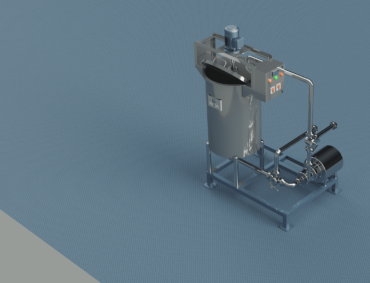
Fabricated with heavy-gauge AISI SS 304/316 food-grade stainless steel, engineered for 24/7 continuous hygienic operation, high thermal efficiency, and minimal dairy maintenance.
A mixing system is a setup or process used to combine different substances or ingredients to achieve a homogeneous mixture. These systems can vary significantly based on the application, from industrial processes to audio engineering. Here’s a detailed description of various types of mixing systems:
| Batch Mixers | Combine ingredients in batches. Once a batch is mixed, it is emptied before starting a new batch. |
| Continuous Mixers | Ingredients are continuously fed into the mixer, and the product is continuously discharged. |
| Static Mixers | No moving parts; mixing is achieved by forcing the flow through stationary elements. |
| Dynamic Mixers | Have moving parts, such as blades or paddles, to facilitate mixing. |
| Mixing Vessel | The container where the ingredients are combined. |
| Agitator | The component that stirs the ingredients. Types include paddles, impellers, and turbines. |
| Drive System | Provides power to the agitator. Typically an electric motor. |
| Control System | Manages the mixing process, controlling speed, time, and other parameters. |
| Chemical Industry | Mixing chemicals for reactions or formulations. |
| Food and Beverage | Mixing ingredients for consistency in products like sauces, doughs, and beverages. |
| Pharmaceuticals | Combining active ingredients and excipients. |
| Cosmetics | Blending various ingredients to produce creams, lotions, and other products. |
| Convection | Bulk movement of particles in the mixture. |
| Diffusion | Movement of particles from high to low concentration areas. |
| Shear | Layers of fluid moving at different velocities, promoting mixing. |
| Analog Mixers | Traditional mixers using analog circuitry. |
| Digital Mixers | Use digital signal processing (DSP) for mixing. |
| Powered Mixers | Include an amplifier in the mixer unit. |
| Live Sound Mixers | Designed for live performance environments. |
| Studio Mixers | Used in recording studios for music production. |
| Channels | Paths through which audio signals are routed. Each channel usually has its own controls. |
| Faders | Controls the volume of each channel. |
| Equalizers (EQ) | Adjust the balance of frequencies in each channel. |
| Pan Controls | Position the audio signal within the stereo field. |
| Effects Units | Add reverb, delay, compression, and other effects. |
| Live Sound Reinforcement | Mixing audio for live performances. |
| Recording Studios | Mixing multiple audio tracks for a cohesive final product. |
| Broadcasting | Managing audio signals for radio and TV broadcasts. |
| Film and Television | Mixing dialogue, music, and sound effects for film and TV productions. |
| Level Balancing | Adjusting the volume levels of different audio tracks. |
| Equalization | Adjusting frequency content to balance the mix. |
| Panning | Distributing audio signals in the stereo field. |
| Effects Processing | Applying reverb, delay, compression, and other effects to enhance the audio. |
Each type of mixing system is designed to optimize the mixing process for its specific application, ensuring consistency, quality, and efficiency.
Authoritative technical answers regarding capacity sizing, food-grade sanitary construction, Clean-In-Place (CIP) cleaning, and dairy plant integration from Aviva Equipments engineers.
Aviva mixing systems are essential dairy products manufacturing machinery used for recombining milk powder, blending butter oil, preparing ice cream mixes, formulating flavored milk, yogurt inoculation, and sugar dissolving for dairy desserts.
We offer batch mixing tanks, continuous powder-liquid blenders (triblenders), and high-shear emulsifying tanks. Mixing vessels can be equipped with high-speed dispersers, slow-speed anchor sweep agitators with PTFE scrapers, or contra-rotating blades.
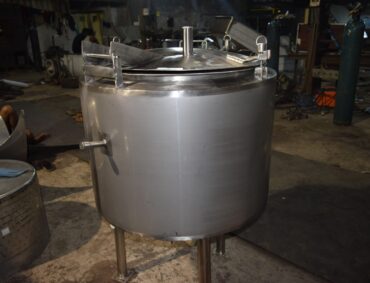
As an established dairy processing equipment manufacturer, we build all mixing vessels from mirror-polished AISI SS 304 or SS 316 with seamless internal radiused corners (R > 25mm). This prevents ingredient residue entrapment and ensures total cleanability.
Yes. Our automated mixing systems feature load-cell based gravimetric batching, pneumatic ingredient dosing valves, temperature controllers, and PLC-HMI touchscreens that store and execute recipes with pinpoint repeatability.
Ranked among dependable milk processing machinery manufacturers, Aviva provides comprehensive turnkey installation, sanitary process piping, electrical panel wiring, and operator training across India and international facilities.
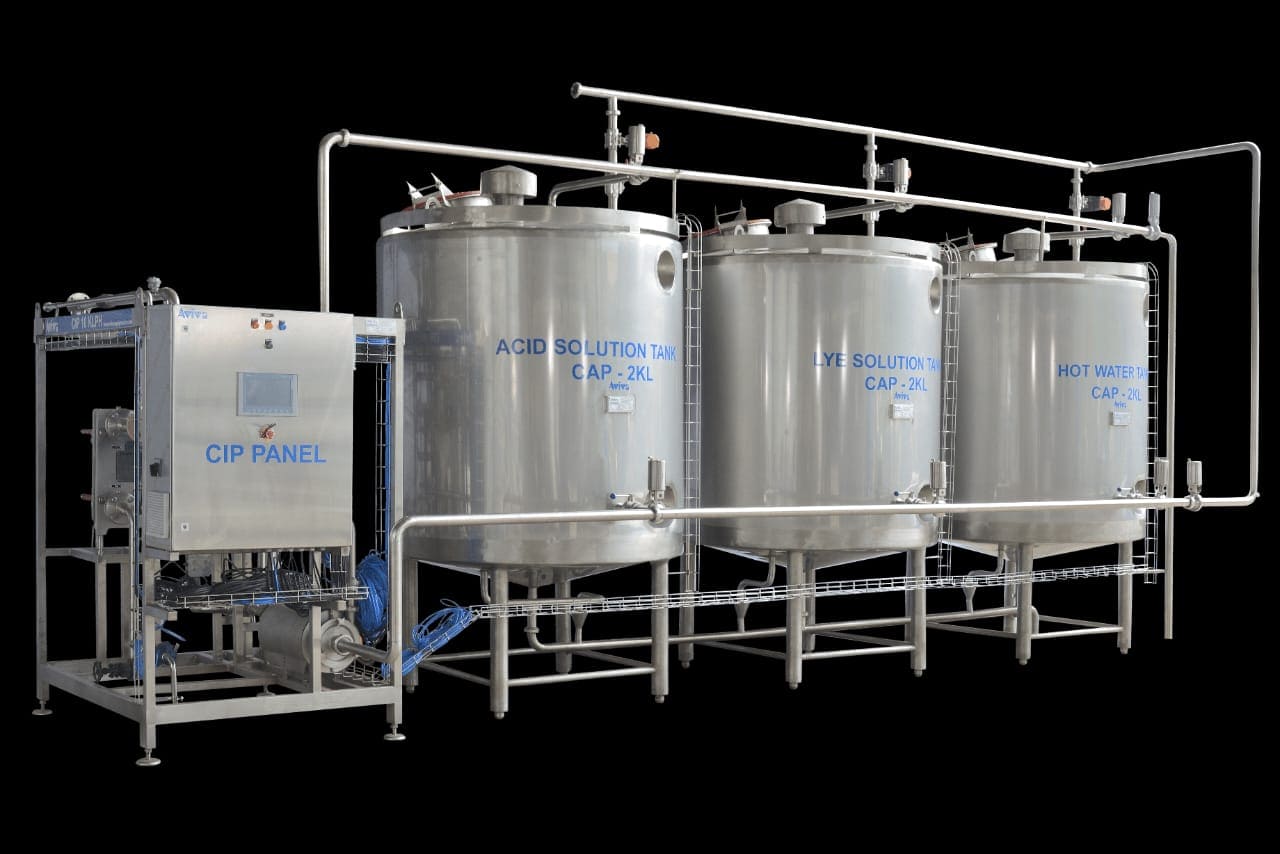
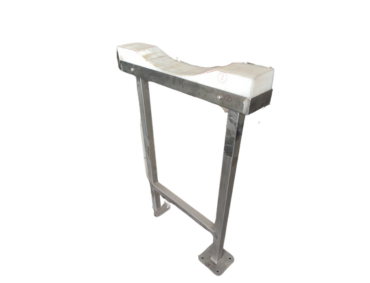
Consult with Aviva Equipments engineering team for custom capacity sizing, P&ID layout drawings, and factory-direct pricing tailored to your plant.