
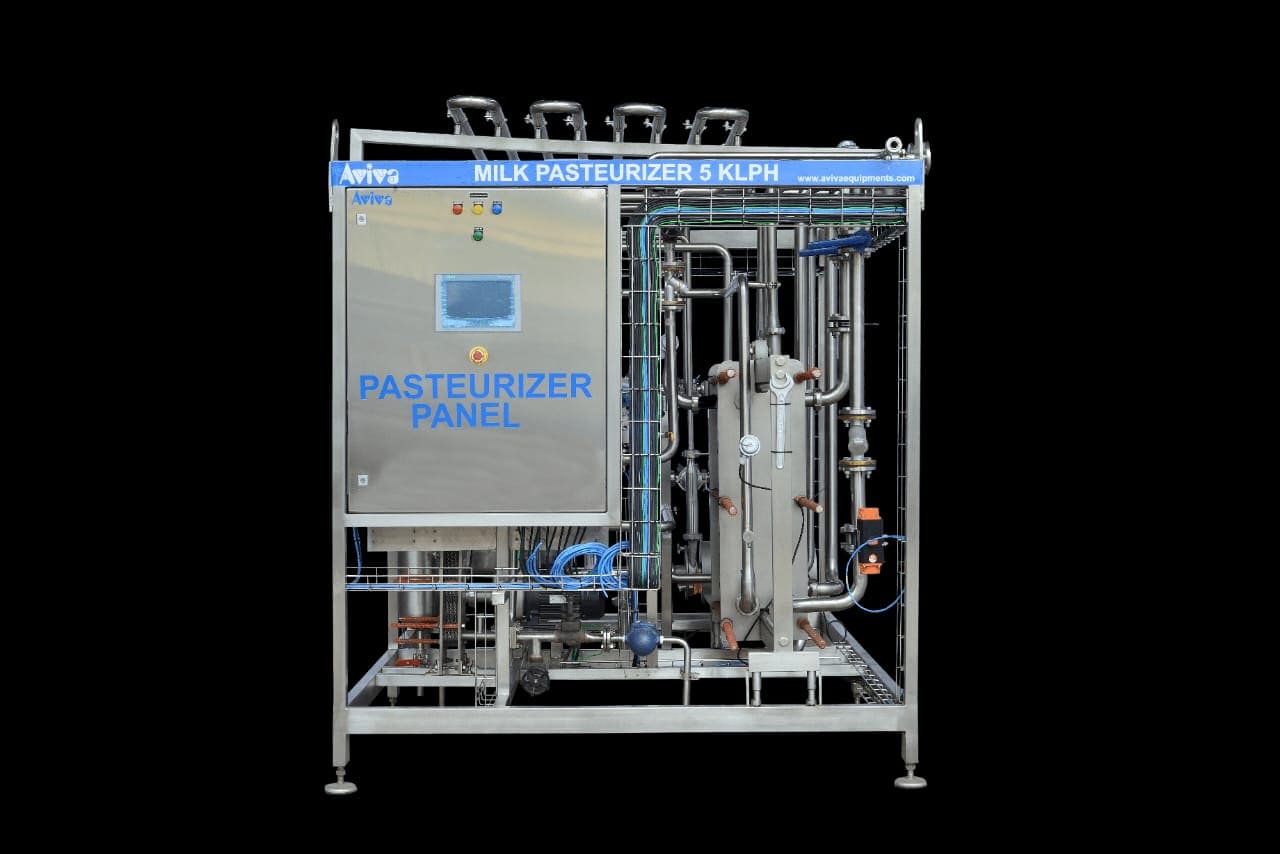
Fabricated with heavy-gauge AISI SS 304/316 food-grade stainless steel, engineered for 24/7 continuous hygienic operation, high thermal efficiency, and minimal dairy maintenance.
A Milk Pasteurizer with a capacity of 5000 Liters Per Hour (5KLPH) is a large-scale industrial machine designed to pasteurize milk at a high rate. Here’s a detailed description of such a pasteurizer:
5,000 Liters Per Hour (5KLPH): Capable of processing up to 5,000 liters of milk every hour, making it suitable for large dairy operations and processing plants.
| Plate Heat Exchanger (PHE) | This section contains a series of plates where hot water or steam heats the milk to the desired pasteurization temperature. |
| Heating Medium | Hot water or steam circulates through the heat exchanger to raise the milk temperature. |
| Automated Control System | Includes programmable logic controllers (PLCs) and a human-machine interface (HMI) for precise control over temperature and flow rates. |
| Temperature Sensors and Controllers | Ensure accurate temperature control and monitoring throughout the process. |
| Flow Control | Regulates the flow of milk to maintain consistent processing rates. |
| Sanitary Design | Made from stainless steel to meet food safety standards and facilitate easy cleaning and maintenance. |
| Safety Features | Includes alarms and safety interlocks to protect both the equipment and operators. |
| Efficient Processing | High throughput capacity allows for large volumes of milk to be pasteurized quickly. |
| Consistent Quality | Automated controls ensure consistent pasteurization, enhancing milk safety and quality. |
| Energy Efficiency | Modern designs often include energy recovery systems to reduce overall energy consumption. |
| Versatility | Can be used for various dairy products, including milk, cream, and other liquid dairy products. |
| Dairy Processing Plants | Suitable for large-scale dairy processing operations. |
| Milk Cooperatives | Ideal for cooperatives that process milk from multiple sources. |
| Food and Beverage Industry | Can be used in various segments requiring large-scale pasteurization of liquid products. |
| CIP (Clean | In-Place) System: Many pasteurizers include CIP systems for automated cleaning and sanitization. |
| Regular Maintenance | Periodic checks and maintenance are essential to ensure the longevity and efficient operation of the pasteurizer. |
Each hybrid system is designed to meet specific needs and conditions, and the choice depends on factors like milk production volume, local climate, and energy costs.
Authoritative technical answers regarding capacity sizing, food-grade sanitary construction, Clean-In-Place (CIP) cleaning, and dairy plant integration from Aviva Equipments engineers.
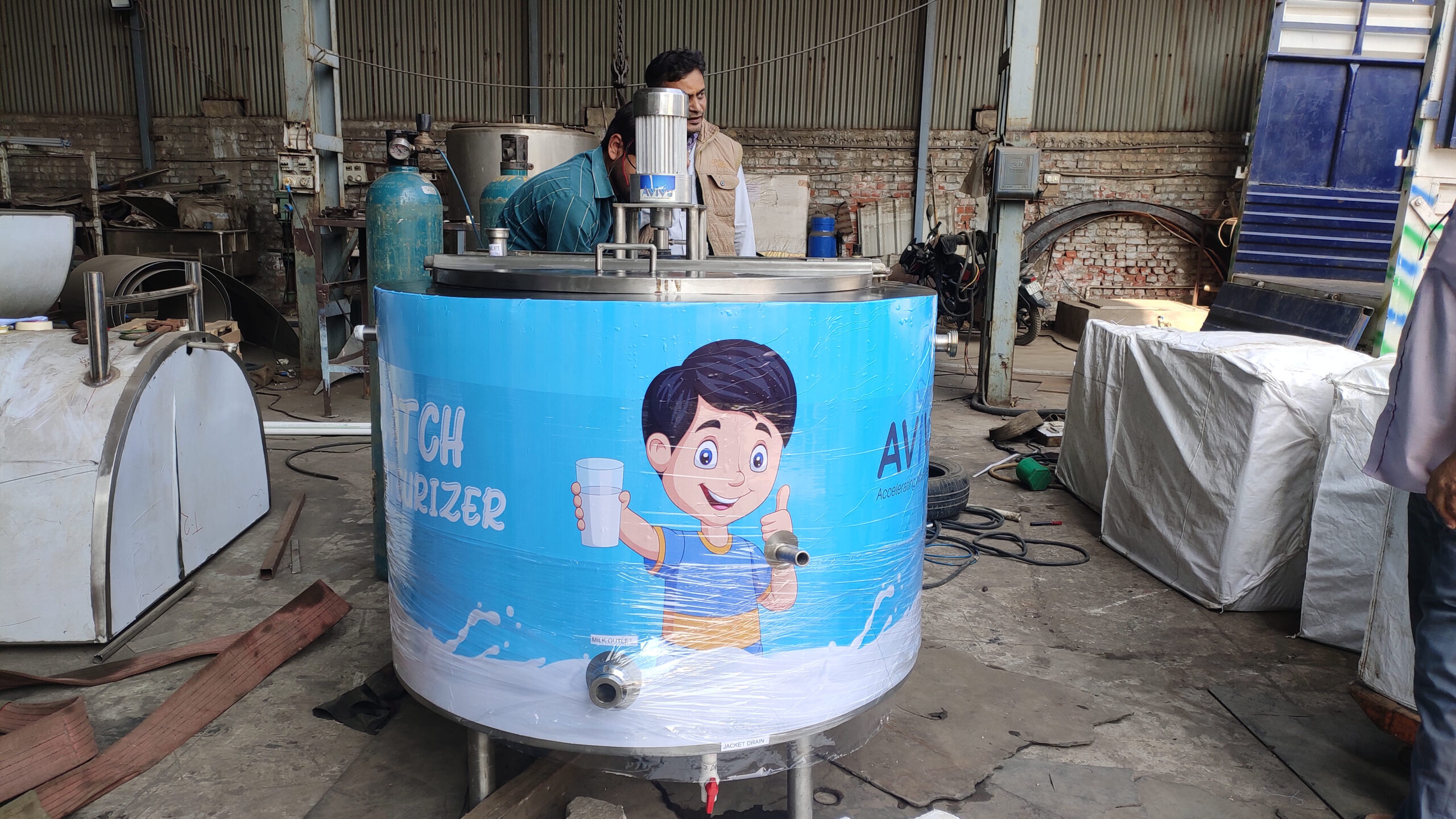
Counted among top milk pasteurization plant manufacturers in India, Aviva Equipments designs and fabricates continuous HTST and batch pasteurization plants in capacities from 500 LPH up to 30,000 LPH, tailored to dairy farms, cooperatives, and commercial milk packaging dairies.
Our plants process liquid consumer milk (full cream, toned, double toned), paneer milk, cheese milk, curd/dahi milk, yogurt milk, and whipping cream with precise automated temperature controls.
Our multi-stage PHE sections achieve up to 90%–92% heat regeneration by using outgoing hot pasteurized milk to preheat incoming cold milk. This saves substantial boiler fuel (steam) and refrigeration chilling power on every liter processed.
Every plant includes an automated pneumatic Flow Diversion Valve (FDV), digital dual-channel paperless temperature data loggers, Sub-Zero/Siemens PLC automation, and sanitary balance tanks with level modulating valves.
Recognized among premier milk processing plant manufacturers in india, Aviva provides comprehensive turnkey engineering—from 3D plant layout, stainless steel sanitary piping, and boiler/chiller integration to on-site commissioning and operator training.
Consult with Aviva Equipments engineering team for custom capacity sizing, P&ID layout drawings, and factory-direct pricing tailored to your plant.